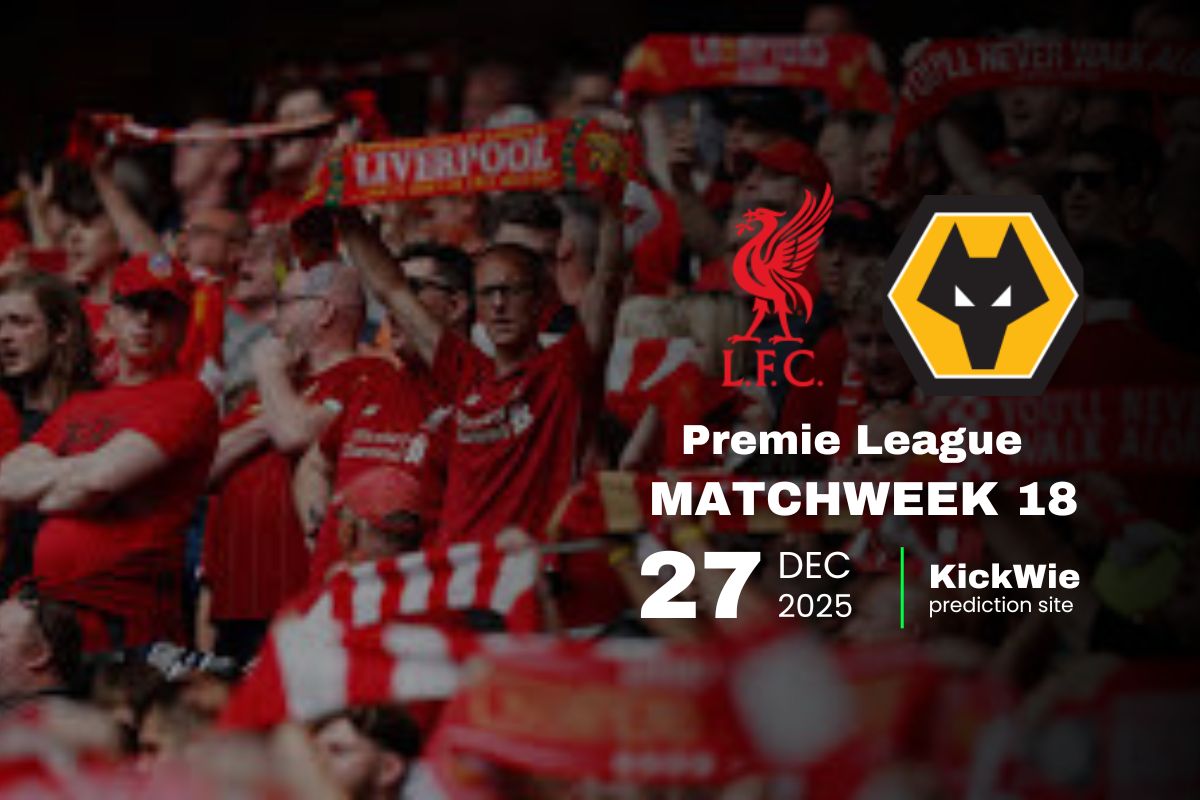
Liverpool host Wolves in the Premier League on 27 December (15:00 GMT), a fixture that has recently tilted so heavily one way that the numbers almost read like a warning label. Across the head-to-head sample provided, Liverpool have 8 wins (80%) to Wolves’ 1 (10%), with goals standing at 18-9 and clean sheets 4-1.
And yet, this game lands with a fresh layer of tension: Arne Slot has confirmed Alexander Isak is expected to miss “a couple of months” with a broken leg, an absence he linked to what he called a “reckless” tackle by Micky van de Ven. Wolves arrive in such bleak league form that Liverpool might still be expected to dictate, but losing a striker for that long changes the feel of any match, even one that looks lopsided on paper.
Isak out, pressure on Slot’s problem-solving
Slot’s frustration is understandable, but the bigger issue now is practical: Liverpool have to find goals without their injured striker, and quickly. The season numbers suggest they should still carry threat — 28 goals scored in 17 league fixtures — but the defensive figures show why this has not been a serene campaign: 25 conceded, leaving a goal difference of 3.
There’s also a stylistic clue in the timing: Liverpool’s “Top Minute Window” for goals this season is 76-90 (37%), which hints at late pressure and persistence. Over the last five matches, that peak shifts to 46-60 (43%) — a different rhythm, and potentially relevant if they need to set the tone earlier rather than relying on late surges.
 Liverpool LIV | Season snapshot (Premier League) | Value |
|---|---|---|
| Liverpool | Position | 5 |
| Liverpool | Record (GP/W/D/L) | 17 / 9 / 2 / 6 |
| Liverpool | Goals (F/A) | 28 / 25 |
| Liverpool | BTTS (Yes %) | 59% |
| Liverpool | Over 2.5 (%) | 65% |
Wolves’ league season: a grim baseline that keeps getting worse
Wolves arrive 20th with 2 points from 17 games (0 wins, 2 draws, 15 defeats). They have scored 9 and conceded 37, a -28 goal difference that paints a picture of a side regularly chasing games and rarely able to change the script.
The underlying “how” is just as worrying. Wolves’ season shot conversion is listed at 19%, with a “Min/Goal (For)” of 170 minutes; in the last five matches that worsens to 225 minutes per goal, alongside a “Scored first (%)” of 0%. If you are never landing first punches, you are basically volunteering to spend 90 minutes in damage limitation.
 Wolves WOL | Season snapshot (Premier League) | Value |
|---|---|---|
| Wolves | Position | 20 |
| Wolves | Record (GP/W/D/L) | 17 / 0 / 2 / 15 |
| Wolves | Goals (F/A) | 9 / 37 |
| Wolves | Scored first (%) | 18% |
| Wolves | Min/Goal (For) | 170 min |
History and recent meetings: Liverpool’s pattern, Wolves’ problem
The recent head-to-heads reinforce the sense of a match-up Wolves have struggled to solve. Liverpool won 2-1 at Wolves on 16 February 2025, and were also 2-0 winners on 19 May 2024. Even when Wolves did land a big punch — the 3-0 win on 4 February 2023 — it reads as an outlier rather than a turning point, with Liverpool winning a run of meetings either side of it.
| Recent head-to-head | Competition | Date | Result |
|---|---|---|---|
| Liverpool vs Wolves | Premier League | 16 Feb 2025 | LIV 2–1 WOL |
| Wolves vs Liverpool | Premier League | 28 Sep 2024 | WOL 1–2 LIV |
| Liverpool vs Wolves | Premier League | 19 May 2024 | LIV 2–0 WOL |
| Wolves vs Liverpool | Premier League | 04 Feb 2023 | WOL 3–0 LIV |
| Liverpool vs Wolves | FA Cup | 07 Jan 2023 | LIV 2–2 WOL |
What the numbers hint at: game state, discipline, and a likely shape of the contest
Kickwie’s “last 10 matches” comparison leans hard towards Liverpool, not only in outcomes but in basic outputs: Liverpool are listed at 1.5 goals scored (avg) to Wolves’ 0.4, and 1.6 conceded (avg) to Wolves’ 2.3. Wolves’ “Failed to score” figure of 70% in that same sample is the sort of statistic that can drain confidence from the first whistle.
There’s also a physical edge in the discipline and territory indicators. Wolves average 14.41 fouls committed this season (16.8 across the last five), while conceding 6.35 corners per game (7.4 in the last five). That is often what it looks like when a team spends too long defending its own box: frantic challenges, repeated clearances, and waves of pressure.
If you are looking for broader context around the league weekend, this is the kind of fixture that tends to feature heavily in premier league predictions discussions — not because it is guaranteed, but because it raises a simple question: can a team in Wolves’ situation stay competitive for long without scoring first?
| Metric (last 10) | Liverpool | Wolves |
|---|---|---|
| Goals scored (avg) | 1.5 | 0.4 |
| Goals conceded (avg) | 1.6 | 2.3 |
| Failed to score | 20% | 70% |
| Corners (avg) | 5 | 1.9 |
| Yellow cards (avg) | 1.8 | 2.3 |
How it could play out: Liverpool’s control vs Wolves’ survival
Liverpool’s most straightforward route is to turn this into an early territorial squeeze — the kind suggested by their corner numbers and Wolves’ tendency to concede them — and remove any doubt before the game becomes the kind of awkward, low-margin afternoon that injuries can invite.
For Wolves, the scenario is harsher and clearer: they have to disrupt Liverpool’s rhythm and, crucially, find a way to be relevant in front of goal. With 9 scored in 17 league fixtures and a last-five return of 2 goals, their margin for error is almost non-existent. A competitive performance without points would simply maintain the pattern; a draw would be a statement of resistance; an away win, given the 2025 season context provided, would amount to a genuine rupture in the story of their campaign.